
The Populist Middle: Why Lent Carr Is Building a Cross-Party Coalition in North Carolina’s 9th District
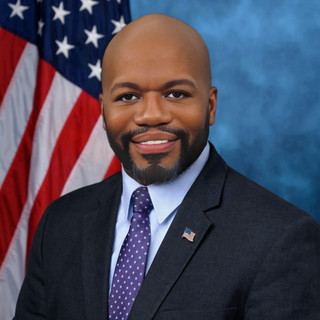
- Professor/Dr. Lent C. Carr, II
- Dec 23, 2025
- 4 min read
Updated: Dec 31, 2025
In an era defined by political exhaustion, ideological polarization, and deep economic anxiety, one congressional campaign in North Carolina’s 9th District is demonstrating how to build a genuinely cross-party coalition without sacrificing principle. Lent Carr for United States Congress is positioning itself in what many analysts describe as the populist middle—a space where unaffiliated voters, disaffected Republicans, and pragmatic Democrats increasingly converge.

Carr’s campaign is not succeeding by triangulating away from substance. It is succeeding by addressing lived economic realities with clarity, moral urgency, and policy specificity—embodying its central promise: “Putting the Welfare of the People 1st and Politics Last.”
Exposing the “One Big Beautiful Bill” Nefarious Backlash
The passage of the so-called One Big Beautiful Bill Act in May 2025 has become a defining contrast point in NC-9. Supported by incumbent Richard Hudson, the legislation has drawn sustained criticism across ideological lines.
Fiscal Alienation.
Independent budget analyses and public commentary following passage of the bill have emphasized three outcomes that resonate negatively with voters:
An estimated $2.4 trillion addition to the national debt over ten years.
Tax provisions widely perceived as favoring large corporations and high-income earners.
Little immediate, tangible relief for middle-class homeowners facing inflation, insurance hikes, and rising local taxes.
These critiques have not been confined to progressive circles. Fiscal conservatives, libertarians, and unaffiliated voters—especially in rural and exurban precincts—have expressed frustration that “megabills” promise prosperity while leaving household budgets unchanged.

The Contrast.
Carr’s campaign frames this moment as part of what he calls a calculated war on the middle class. By juxtaposing Hudson’s vote for an expansive federal package with Carr’s Property Tax Freedom Act, the campaign offers voters a clear, easily understood alternative: direct, recurring financial relief for homeowners.
In a high-inflation environment, the promise of eliminating property taxes is not abstract policy—it is a monthly mortgage statement, an escrow adjustment, and a concrete sense of stability.
“Property Tax Freedom” as a Cross-Party Wedge
Carr’s flagship proposal has become the campaign’s most potent unifying issue precisely because resentment toward property taxes is not partisan.
Universal Appeal.
Republicans and Libertarians view property taxes as a violation of true ownership—effectively “renting your land from the government.”
Democrats and progressives increasingly frame the issue as housing justice, particularly for seniors, working families, and fixed-income households at risk of displacement.
By addressing both critiques simultaneously, Carr’s proposal transcends ideological labels and speaks directly to shared economic anxiety.
Economic Inclusion Over Abstraction.
Voters in NC-9 are less persuaded by macroeconomic growth figures than by whether they can keep their homes. Eliminating one of the largest recurring household bills addresses what political science literature consistently identifies as kitchen-table economics—the daily, non-negotiable expenses that shape voter behavior more powerfully than party identity.
Campaign engagement metrics and grassroots feedback suggest this policy is not merely popular; it is memorable. In a crowded political environment, that distinction matters.

Meeting Fire With Fire: Rhetorical Alignment Without Ideological Capture
One of the most misunderstood elements of Carr’s campaign is its rhetorical posture. Rather than dismissing the energy that fueled the MAGA movement, Carr competes with it—without adopting its authoritarian or exclusionary premises.
Anti-Oligarchy Framing.
Carr’s 99% Project 2026 employs language that resonates across ideological divides:
“Billionaire oligarchy”
“People’s movement”
“Democracy warrior”
This framing taps into the same anti-system sentiment driving right-wing populism, but redirects it toward structural economic reform rather than cultural grievance. In this narrative, Carr positions himself as the authentic outsider, while long-serving incumbents represent entrenched power.
Moral and Religious Resonance.
As a nationally recognized faith leader, Carr’s integration of moral language carries particular weight in a religiously conservative district. His framing emphasizes stewardship, justice, and community responsibility—values that soften partisan resistance and allow conservative voters to engage his platform without feeling they are betraying their identity.
This is not political theater; it is cultural fluency.
An Abnormal Political Climate Creates an Opening

The broader electoral environment amplifies Carr’s appeal. Multiple surveys conducted in spring 2025 revealed rare, cross-partisan dissatisfaction with the country’s direction, including majorities of Republicans expressing frustration with federal governance.
Voter Fatigue.
Political science research consistently shows that when dissatisfaction becomes universal, party loyalty weakens. Voters begin searching for candidates who feel different, not merely oppositional.
The Strategic Sweet Spot.
Carr’s platform occupies a unique convergence point:
Left-leaning economic goals: healthcare access, economic inclusion, consumer protection.
Right-leaning structural reforms: tax abolition, anti-elite rhetoric, decentralization.
Unaffiliated voter appeal: independence from party orthodoxy and donor-driven policymaking.
In abnormal times, abnormal coalitions form. Carr’s campaign appears intentionally designed for that reality.
Why This Matters for the Primary—and the General Election
North Carolina’s 9th District contains one of the state’s largest concentrations of unaffiliated voters. These voters do not respond to ideological purity tests; they respond to credibility, clarity, and material benefit.
By centering policies that are:
Easy to understand
Directly beneficial
Morally framed
Anti-establishment without being anti-democratic

Lent Carr is positioning himself not merely as a Democratic alternative, but as a district-wide solution on fundamental American values. That distinction explains why his campaign is generating traction beyond traditional party boundaries—and why it may ultimately reshape the electoral map in NC-9.
In unprecedented political times, the candidate who places people before politics may be the one voters have been waiting for.


Well said sir