

Advancing Environmental Justice in North Carolina’s 9th Congressional District
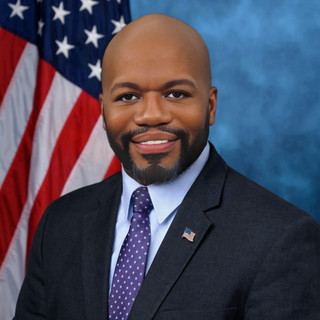
- Professor/Dr. Lent C. Carr, II
- Dec 30, 2025
- 4 min read
Updated: Feb 3
A Policy-Ready Framework for Sustainability, Public Health, and Economic Equity
By Lent C. Carr, II | Candidate for the United States Congress (NC-09)
Environmental justice is not an abstract ideal; it is a measurable public health, economic, and civil rights imperative. Across North Carolina—and acutely within the 9th Congressional District—environmental harms have followed predictable patterns tied to income, race, and political power. Communities that contributed the least to pollution have borne the greatest burden of its consequences. This reality is not accidental. It is the cumulative outcome of decades of zoning decisions, industrial siting practices, and regulatory neglect.
As a candidate for the United States Congress, I advance environmental justice as a policy-driven solution set—grounded in scientific research, epidemiological data, and economic analysis—that protects public health, restores environmental integrity, and generates durable prosperity for working families.





I. The Empirical Case for Environmental Justice
Environmental justice rests on a simple but rigorous principle: no population should experience disproportionate exposure to environmental hazards or unequal access to environmental benefits. National peer-reviewed research demonstrates that communities with lower median household incomes and higher concentrations of minority residents are significantly more likely to be located near:
Industrial emission sources and hazardous waste facilities
High-traffic transportation corridors with elevated particulate matter (PM2.5)
Legacy contamination sites, including coal ash ponds and unlined landfills
In North Carolina, this pattern is especially evident in eastern and southeastern regions, including portions of NC-09. Studies conducted by public health institutions and state environmental agencies consistently associate elevated exposure in these areas with higher rates of:
Asthma and chronic obstructive pulmonary disease
Cardiovascular illness linked to long-term particulate exposure
Adverse birth outcomes and increased cancer risk near unremediated waste sites

These are not isolated correlations; they are statistically significant outcomes validated across multiple datasets. Environmental injustice is therefore a cost driver—increasing healthcare expenditures, reducing workforce productivity, and undermining educational attainment.
II. Environmental Inequity in North Carolina’s 9th District
NC-09 encompasses rural, suburban, and semi-industrial communities that face a convergence of environmental stressors:
Aging water infrastructure vulnerable to chemical contamination
Proximity to industrial agriculture operations affecting air and groundwater quality
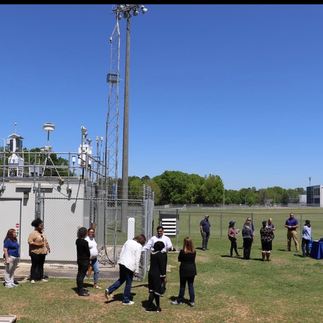
Insufficient environmental monitoring capacity in rural census tracts
In communities from Hoke and Robeson counties through adjacent areas of Cumberland and surrounding regions, residents face barriers to clean energy investment, limited access to environmental health data, and underrepresentation in permitting decisions that directly affect their lives.
This is not merely an environmental problem—it is a democratic deficit.


III. Data-Driven Governance: From Mapping to Accountability
Environmental justice policy must be evidence-based. Modern environmental governance requires integrating:
Environmental exposure data
Public health outcome metrics
Socioeconomic vulnerability indicators
Tools such as cumulative impact mapping—now used in several states—demonstrate how overlapping pollution sources compound health risks. When these datasets are overlaid with demographic and income data, the policy implications become unmistakable: environmental risk is concentrated where political power is weakest.
Effective governance therefore demands not only transparency but enforceable standards and community authority.
IV. Proposed Federal Legislation
The Environmental Justice, Health, and Economic Resilience Act of 2026
As your Representative, I will introduce the Environmental Justice, Health, and Economic Resilience Act of 2026, a comprehensive federal framework designed to deliver measurable outcomes across NC-09 and the nation.
Core Provisions
Cumulative Impact Safeguards
Federal permitting decisions must account for total environmental burden—not isolated emissions—prioritizing communities with existing exposure disparities.
Environmental Health Equity Grants
Targeted funding for air, soil, and water remediation projects in historically overburdened communities, with priority for rural and low-income districts.
Community Consent & Participation Standards
Mandatory community advisory councils with binding consultation authority in federal and state-approved projects impacting environmental health.
Clean Energy Access & Workforce Transition
Direct investment in renewable energy infrastructure, energy-efficiency retrofits, and workforce training programs within environmental justice communities—creating family-sustaining jobs while reducing emissions.
Public Health Surveillance & Reporting
Expanded CDC and EPA coordination to track environmental exposure-linked health outcomes and publish annual Environmental Justice Impact Reports.
Enforcement with Equity
Strengthened civil penalties and corrective mandates for repeat violators, with enforcement resources directed to regions historically underserved by regulators.
V. Economic and Fiscal Rationale
Environmental justice is not a cost center; it is a return-on-investment strategy. Independent economic analyses demonstrate that:
Every dollar invested in pollution reduction yields multiple dollars in avoided healthcare costs.
Clean energy deployment lowers household utility expenses over time.
Environmental remediation increases property values and local tax bases.
In NC-09, these investments translate directly into healthier families, stronger schools, and resilient local economies.
VI. Community Action and Democratic Stewardship
Federal policy succeeds only when communities are empowered. Residents must have:
Timely access to environmental data
Language-accessible public participation processes
Protection from retaliation for environmental advocacy
Environmental justice is democracy practiced at the neighborhood level.
VII. A Moral and Constitutional Imperative
The right to breathe clean air, drink safe water, and live free from preventable environmental harm is inseparable from the promises of equal protection and general welfare enshrined in our Constitution. Environmental injustice violates both.
North Carolina’s 9th Congressional District deserves leadership that treats environmental health as foundational infrastructure—not an afterthought.
Conclusion: From Burden to Opportunity
Environmental justice is the bridge between sustainability and fairness, between economic vitality and public health, between democracy and dignity. Through rigorous data, accountable governance, and bold legislative action, we can transform communities historically treated as sacrifice zones into engines of opportunity.
This is not aspirational politics. It is actionable policy—and it is long overdue.
Campaign & Contact Information
Lent C. Carr, II for United States Congress (NC-09)
Support This Campaign for Environmental Justice
Donate via ActBlue: https://secure.actblue.com/donate/lent.carr_4_us-congress
Together, we will put the welfare of the people first—and politics last.


Great knowledge