
Lent C. Carr, II, for United States Congress Proposed: Judicial Insights & Restoring Accountability "JIAA"
- Professor/Dr. Lent C. Carr, II
- Jul 14, 2025
- 4 min read
Updated: Aug 4, 2025
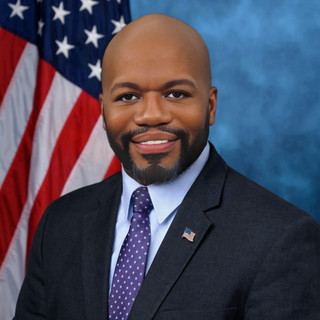
Author: Chancellor and Professor Dr. Lent C. Carr, II, Candidate for United States Congress, NC-09
Fellow citizens of North Carolina’s 9th Congressional District,
In these unprecedented times, our democracy stands at a critical juncture. The Supreme Court’s recent rulings—from partisan gerrymandering protections to curbs on administrative agency authority—have revealed a court increasingly detached from both precedent and the will of the people. When justices legislate from the bench, political agendas override justice, and American families bear the cost.

Why Judicial Oversight Matters Today
Erosion of Checks & Balances
Since 2021, the Court has overturned or weakened over 30 federal statutes and regulations. This shift has moved power from elected bodies to unelected judges (PEW Research Center, 2024).
Lifetime Tenure Risks
Justices appointed in their 40s can shape law for decades—often outliving the presidents who nominated them. Currently, 70% of sitting justices have served over 15 years, far exceeding the framers’ expectation of “good behavior.”
Ethics Gaps
No binding code of conduct applies to Supreme Court justices. Recusals are self-determined, which fosters public distrust. A 2023 Gallup poll found that only 34% of Americans trust the Court “a great deal” or “a fair amount.”
Our Constitution demands accountability. That’s why I am proud to introduce my plan for Judicial Oversight, Term Limits, and Congressional Rules & Ethics for the Federal Judiciary.
Detailed & Bold Issue Platform: Senate Judiciary Reform Act
1. Judicial Term Limits
Lifetime + 10-Year Term Cap: After an initial lifetime appointment, justices may serve a maximum of 10 additional years under a renewable term system. This balances experience with accountability.
Staggered Expirations: Terms will expire on a rotating schedule to prevent partisan stack-packing.
2. Congressional Ethics & Oversight
Robust Code of Conduct: We will codify enforceable ethics rules for Supreme and District Court judges. This includes financial disclosures, gift restrictions, and mandatory recusal procedures.
Judicial Review Committee: Establish a bipartisan congressional body with authority to investigate ethics violations and recommend disciplinary actions, including removal.
3. Transparency & Public Access
Live Broadcasts: All oral arguments and written opinions must be publicly streamed and archived.
Reasoned Voting Records: Justices will publish individual rationales for each vote to enhance clarity and accountability.
4. Anti-Corruption Safeguards
Quid Pro Quo Prohibition: We will criminalize gifts or favors from political actors or wealthy interests, with mandatory reporting and penalties.
Cooling-Off Period: Former justices and federal judges will be barred from lobbying or political work for three years post-tenure.

White Paper: The Judicial Integrity & Accountability Act (JIAA)
I. Executive Summary
The Judicial Integrity & Accountability Act establishes term limits, enforces a binding code of ethics, and creates congressional oversight. This aims to restore the judiciary’s role as an impartial arbiter, not a political powerhouse.
II. Problem Statement & Data
Policy Creep: Over 40% of Supreme Court decisions since 2020 have overturned duly passed federal laws or agency rules. This is a significant increase compared to just 12% between 2000 and 2009 (Congressional Research Service, 2024).
Public Confidence Crisis: Only 34% of Americans trust the Court, down from 60% in 2010 (Gallup, 2023).
Financial Vulnerabilities: Justices hold assets worth up to $15 million, with no mandatory disclosure beyond voluntary reporting.
III. Key Provisions of JIAA
A. Term Limits & Appointment Reform
Initial Lifetime Appointment remains, honoring tradition.
Renewable Ten-Year Terms thereafter, subject to Senate confirmation to ensure periodic accountability.
B. Binding Code of Conduct
Modeled on the Code for lower-court judges but with enforcement powers vested in the Judicial Review Committee.
Annual financial disclosures will be published publicly, including spouse assets and liabilities.
C. Judicial Review Committee
Comprised of five Senators (3 major party, 2 minority) and five House members (3 major, 2 minority), confirmed by both chambers.
Powers include subpoenaing testimony, imposing censure, and recommending removal to the full Congress.
D. Ethics & Anti-Corruption Measures
Prohibited Conduct: Acceptance of gifts, travel, or speaking fees from entities with judicial interests will be banned.
Quid Pro Quo Clause: Offers or exchanges of political favors or financial contributions will be criminalized under the Act.
E. Transparency Enhancements
Mandatory live streaming of oral arguments and publication of all bench memoranda.
Individual vote justifications in each Supreme Court decision will be released within 30 days of ruling.
IV. Legislative Path & Coalition
Bipartisan Sponsorship: We will identify moderates and reform-minded legislators committed to restoring balance.
Stakeholder Engagement: Collaborate with legal scholars, bar associations, civic groups (e.g., Common Cause), and faith leaders.
V. Implementation & Oversight
Phased Rollout: Term limits will take effect for justices appointed after enactment; the ethics code will apply immediately to all serving judges.
Annual Reporting: JIAA Annual Report to Congress will cover compliance, disciplinary actions, and public trust metrics.
VI. Conclusion
The Judicial Integrity & Accountability Act responds to decades of unchecked judicial activism and ethical blind spots. By combining term limits, enforceable ethics, and robust oversight, we reaffirm the judiciary’s service to the Constitution—not partisan politics. Together, we can restore the balance of power and protect our democracy for future generations.
Stay informed with real-time analysis and expert commentary—visit www.lentcarrforuscongress.com for updates and next steps.

Comments